Direct answer
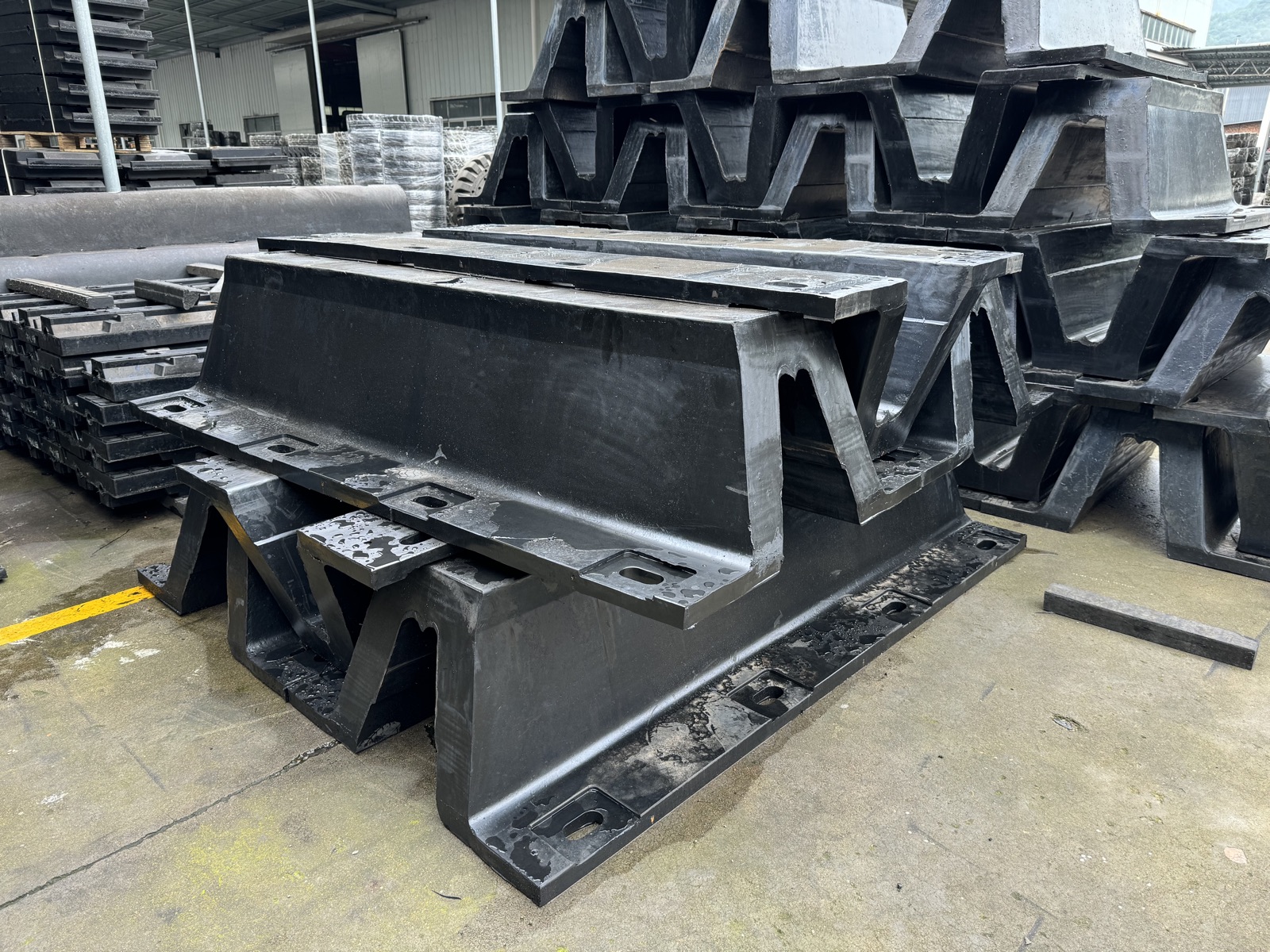
A marine rubber fender inquiry should include a dimensioned end view, overall length, internal bore or cavity dimensions, mounting-hole diameter and spacing, quantity, installation position and project location. A profile name such as D, DA or cylindrical is not enough to release a production specification.
Buyer intent
Use the page to prepare a technically useful inquiry
This guide separates early product identification from the information needed for quotation and production confirmation.
- Identify the application and visible profile
- Record dimensions and mounting details
- Attach drawings, photographs and quantity
- Confirm final requirements in writing
01 · Practical guidance
Minimum dimension checklist
| End-view profile | A square-on drawing or photograph showing the complete outside and inside shape |
|---|---|
| Overall width and height | The maximum cross-section dimensions, with units clearly stated |
| Internal bore or cavity | Diameter, width, height, position and shape where applicable |
| Overall length | Required length of each piece and any end treatment |
| Mounting holes | Hole diameter, centre-to-centre spacing, count, direction and edge distances |
| Installation space | Available projection, supporting surface and nearby obstructions |
02 · Practical guidance
Project information to include with dimensions
- New installation or replacement of an existing fender
- Dock, jetty, wharf, workboat, vessel or industrial contact application
- Required quantity and preferred delivery destination
- Existing drawing, old sample, site measurements and overview photographs
- Contractual standard, inspection or performance requirements supplied by the project
03 · Practical guidance
Common RFQ problems to avoid
Do not send only a perspective photograph without a scale. Perspective can distort the apparent width, height and hole position.
Do not assume two fenders with the same trade name are interchangeable. Compare the complete dimensioned cross-section and mounting layout.
Do not use public website photographs as production drawings. Website content supports initial identification; the approved order documents control production.
Frequently asked questions
Marine Rubber Fender Dimensions and RFQ Guide FAQ
01Which rubber fender dimension is most important?+
No single dimension is sufficient. The complete cross-section, length and mounting layout must be checked together.
02Should measurements be in millimetres or inches?+
Either can be reviewed if the unit is stated clearly. A dimensioned drawing should use one consistent unit system.
03Is a photograph with a ruler enough?+
It is useful for initial identification, but a dimensioned drawing or measurement sheet is safer for quotation and technical confirmation.
04What if the old fender is deformed?+
Record several measurements, identify wear or deformation, and provide the original drawing or an undeformed sample if available.