Direct answer
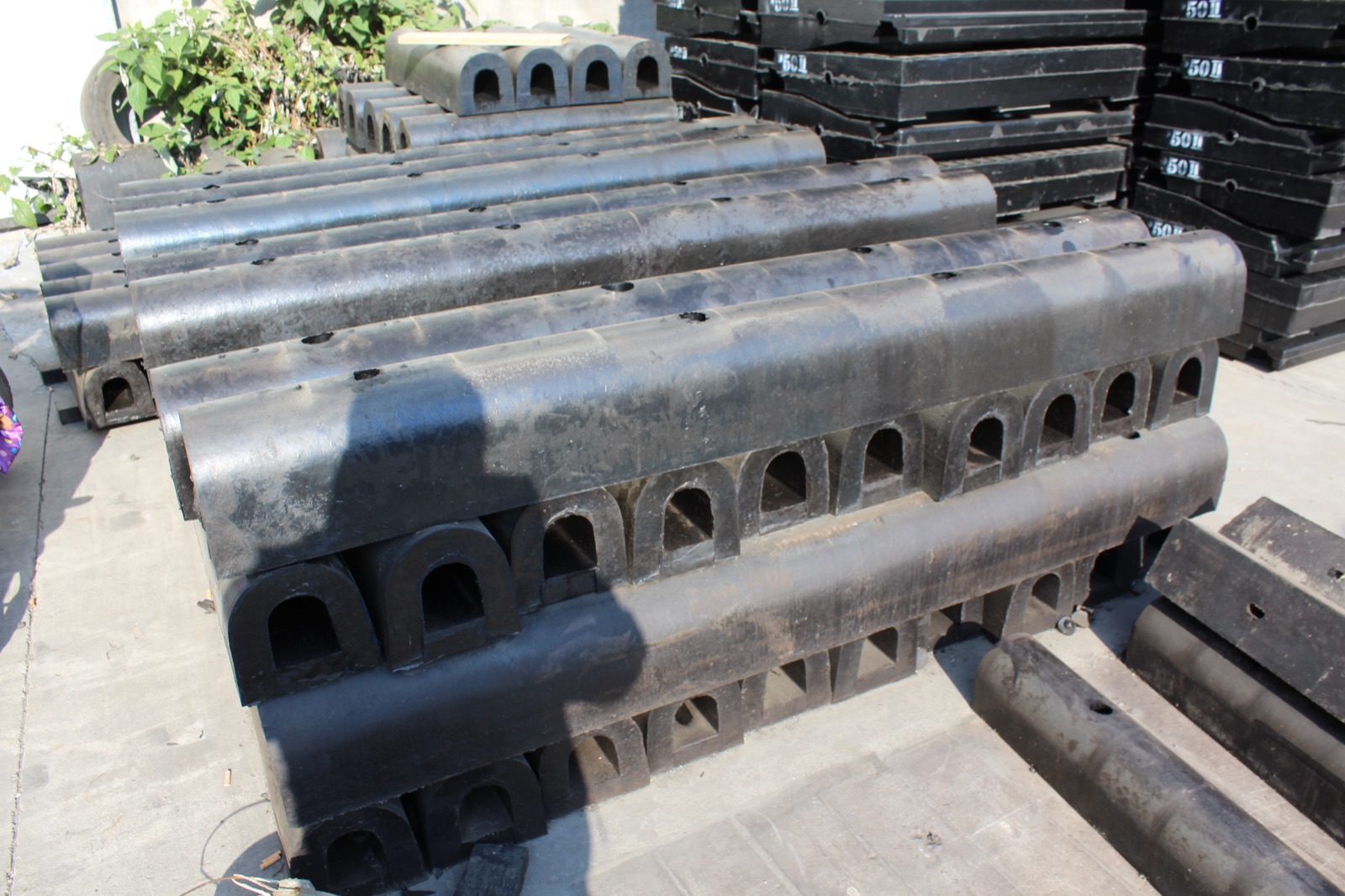
A D type rubber fender normally has a flat mounting face and D-shaped outside profile, while a cylindrical fender has a circular outside profile and central bore or solid section. They are not interchangeable by name: mounting arrangement, available space, dimensions and project performance requirements must be checked.
Buyer intent
Use the page to prepare a technically useful inquiry
This guide separates early product identification from the information needed for quotation and production confirmation.
- Identify the application and visible profile
- Record dimensions and mounting details
- Attach drawings, photographs and quantity
- Confirm final requirements in writing
01 · Practical guidance
Practical comparison
| Outside profile | D type: D-shaped with a flat face for mounting. Cylindrical: circular outside profile. |
|---|---|
| Typical fixing concept | D type: commonly fixed through or against the flat face. Cylindrical: may be suspended, sleeved or fixed according to the project design. |
| Replacement check | D type: width, height, cavity, length and hole layout. Cylindrical: outside diameter, inside diameter or bore, length and fixing arrangement. |
| Selection basis | Both require application, available space, contact direction, supporting structure and approved technical requirements. |
| Public evidence on this site | Verified company photographs are available for D and DA shaped fenders. No cylindrical product photograph or performance table is claimed on this page. |
02 · Practical guidance
When a D type profile may be discussed
- The existing mounting face is flat and the replacement profile is confirmed as D-shaped
- Space is limited and the drawing specifies a compact profile
- The buyer can provide the full cross-section and fixing layout
- The project requirements have been reviewed by the responsible designer or buyer
03 · Practical guidance
Why a cylindrical profile may be a different project
A circular profile changes the way the fender is supported, contacted and measured. Even when both products are described as marine rubber fenders, their mounting and project documentation may be different.
Zhejiang Tongchao can discuss drawing-defined profiles, but this comparison is selection guidance rather than a claim that every profile or performance class is available.
Frequently asked questions
D Type vs Cylindrical Rubber Fender FAQ
01Is a D type fender better than a cylindrical fender?+
Not in every application. The correct choice depends on the mounting structure, contact conditions, space and project requirements.
02Can a cylindrical fender replace a D fender?+
Not without an engineering and mounting review. The cross-section and fixing arrangement are different.
03What measurements distinguish the two?+
For D type, record width, height, cavity, length and holes. For cylindrical type, record outside diameter, inside diameter or bore, length and fixing arrangement.
04Does Zhejiang Tongchao publish cylindrical fender performance data?+
No verified cylindrical performance data is published on this page. Technical values must come from approved project documents.